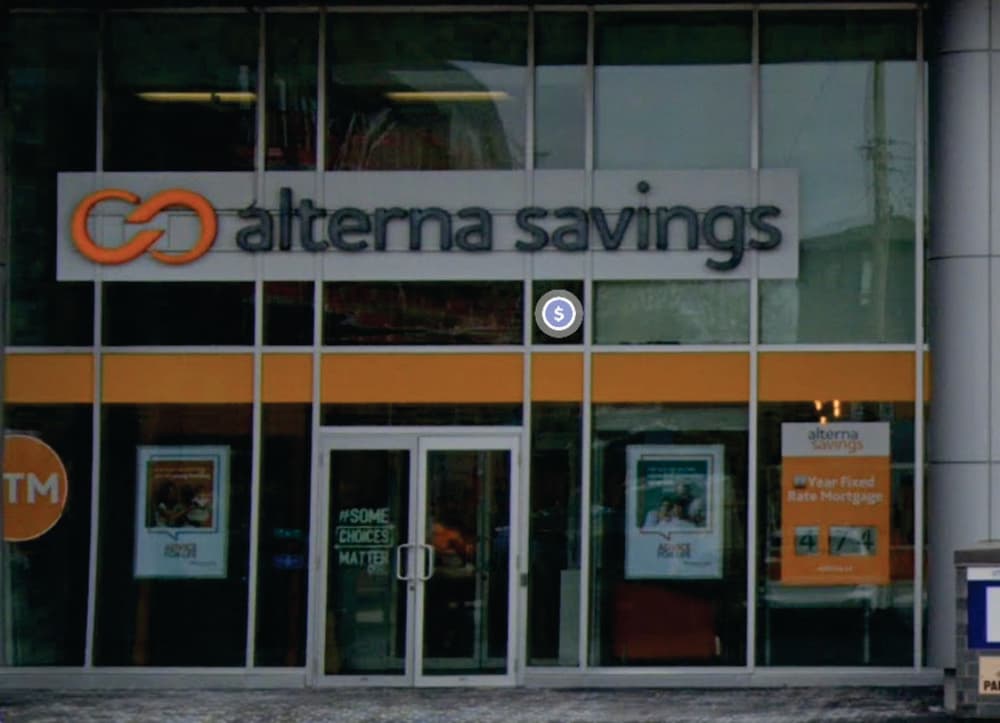
Why 'saw it while passing' beats paid ads for brick-and-mortar customer acquisition
A widely-cited Burger King consumer awareness survey asked respondents how they first became aware of a particular restaurant location. The most popular answer was "saw it while passing" at 35%. The second was "always knew it was there" at 29%. Paid advertising drove 10%. That is roughly two-thirds of customer awareness coming from the building itself, for one of the most heavily-advertised brands in North America.
Most SMB operators currently spending on Google Ads, Meta Ads or local digital have never seriously evaluated what their physical signage is doing - or could be doing - for the same customer-acquisition goal. The CPM math, the FedEx consumer data, and the US Small Business Administration's published position all argue that for a brick-and-mortar business, the order of operations is usually reversed.
This is the case for getting the storefront signage right first and layering paid digital on top, not the other way around.
What the digital-ad spend actually buys
A paid digital ad on Google, Meta, or LinkedIn is doing one specific thing well: it puts a targeted message in front of a specific audience who matches a buying signal. For businesses where the customer buys ahead of arriving - appointment-driven dental specialists, B2B professional services, e-commerce-anchored retail - that mechanic is the right one. The customer makes the decision online and then transacts.
For businesses where the customer decision happens at the storefront - QSR, convenience, service stations, sit-down restaurants, plaza retail, walk-in service businesses, and most multi-tenant plaza tenants - the paid digital ad is reaching the customer at the wrong moment. The decision will be made when the customer passes the storefront, parks the car, or walks past on foot. At that moment, what is doing the work is the sign on the building, not the ad that ran on the phone three days ago.
This is the framing the Burger King survey makes available. For impulse-stop and walk-in categories, paid advertising is contributing 10% of first awareness. The building - what the customer sees as they drive or walk past - is contributing closer to 65%. Even for one of the most heavily-advertised brands in the world.
The impulse-stop data
The Institute of Transportation Engineers impulse-stop data, used widely in retail site selection, gives category-level expected rates for first-visit conversion from passing traffic:
| Category | Impulse-stop rate | |----------|-------------------| | Service stations | 45% | | Fast food | 40% | | Convenience stores | 40% | | Shopping centres under 100K sq ft | 35% | | Sit-down restaurants | 15% |
Categories at the top of that table derive the largest absolute revenue benefit from improved exterior signage, because the largest share of their customer base is making the decision to enter at the storefront. A small absolute improvement in the visibility, legibility, or condition of the storefront signage at a service station translates directly into a meaningful share of the 45% impulse-stop customer base who would otherwise drive past.
Categories at the bottom of that table derive smaller absolute benefit from exterior signage alone, because the customer is more likely to have decided before they arrive. A sit-down restaurant still benefits from quality signage for trust, identification and wayfinding, but the leverage is smaller than at a QSR or convenience location.
The right media mix for an SMB depends on where the category sits on this curve. For high-impulse-stop categories, the case for spending heavily against signage before paid digital is empirically strong. For low-impulse-stop categories, the case is weaker on direct lift but still strong on trust and identification.
The CPM gap
Cost-per-thousand-impressions is the standard cross-channel comparison. The orders of magnitude across channels are large enough to change media mix decisions.
On-premise signage runs in the range of roughly $0.02 to $0.15 CPM by industry estimate, depending on traffic counts and amortization period. A quality channel letter sign on an Ottawa storefront with reasonable traffic counts and a ten-year working life produces impressions in that range.
Newspaper advertising CPMs are commonly cited around $19.70. The gap is roughly two orders of magnitude.
Paid digital sits between, and varies dramatically by platform and audience. Local programmatic display can be priced in the low single-digit CPMs. Targeted social media advertising runs higher, particularly for narrow audience segments. Search advertising is priced on cost-per-click rather than CPM, but on an impression basis sits in mid-range CPM territory for most local audiences.
For most brick-and-mortar SMBs, the cheapest impression they can buy is the one on their own building. The next-cheapest is local programmatic display. Paid social, search, and out-of-home billboard impressions all sit substantially higher. The CPM gap is the structural reason the US Small Business Administration's Signage Sourcebook describes on-premise signage as the most cost-effective form of advertising available to small businesses.
The CPM math does not say signage is the only channel. It says signage should usually be in the mix before more expensive channels are scaled up.
The SBA position
The US Small Business Administration's Signage Sourcebook is a publicly-available reference document that describes on-premise signage as the most cost-effective form of advertising available to small businesses. The phrasing has been quoted in nearly every subsequent signage-industry paper and trade publication. Two things are worth saying directly about it.
The SBA position is not a marketing claim from the signage industry. It is a position from a US federal small business agency, based on the available research at the time it was published.
The position is consistent with the academic research that came before and after. USD 1997, UC 2012, Taylor's 2010 and 2012 work, FedEx Office 2012's consumer survey, and the BrandSpark consumer data all converge on the same conclusion: signage is doing more for customer acquisition at the storefront than most operators give it credit for. The SBA position is the policy summary of that research base. For the full underlying evidence, see the business case for storefront signage research summary.
What the consumer data shows directly
The FedEx Office 2012 consumer signage survey, n=914, is the most-cited consumer data on signage behaviour. Three numbers are worth restating directly because they make the case in plain language.
76% of consumers have entered a store solely because of a sign. Not "considered," not "noticed," but actually entered.
68% of consumers have purchased a product or service after entering a store because of a sign. Sign awareness translates into revenue, not just foot traffic.
75% of consumers have told someone else about a business they discovered because of a sign. The word-of-mouth dimension is the one digital cannot directly produce.
Those three numbers describe customer acquisition behaviour that runs through the storefront, not through the phone. The paid digital ad that arrives at the customer three days before they pass the storefront is doing different work than the sign on the building. Both can contribute. The Burger King survey suggests the relative contribution is roughly six to one in favour of the building, for one of the most heavily-advertised brands in the world.
The honest counter-argument
Digital advertising is targetable in ways signage is not. A dental specialist looking for new-patient acquisition in Kanata can put a paid digital ad in front of households within a specific postal code who match a buying signal. The same dental specialist cannot put their sign in front of only the households matching the buying signal. The sign sits in front of everyone who passes the site, whether they are a prospect or not.
For appointment-driven and B2B businesses, that targetability advantage is real. The right media mix for a high-end implantology specialist or a private wealth advisor leans more heavily on targeted digital than the right mix for a convenience store or QSR.
Digital is also faster to A/B test, easier to attribute, and more responsive to in-flight campaign optimization. Signage is a capital decision with a multi-year working life. The two channels are not equivalent and the choice is rarely all-or-nothing.
The right framing is sequencing. For most brick-and-mortar SMBs, the case is: get the primary storefront signage right first. Then layer paid digital on top. The reverse order - scaling paid digital while the storefront sign is weak, inherited, or amateur - leaves money on the table at the point where the customer is actually deciding.
The practical mix for an Ottawa small business
For an SMB owner in Ottawa, Kingston, Gatineau or elsewhere in our service area evaluating where to spend the next marketing dollar:
Step 1: Audit the storefront. Stand across the street. Stand at the parking lot edge. Walk past on foot. Score the existing signage on identification, branding, wayfinding, and impulse induction. If any of those is weak, that is the first spend.
Step 2: Get the primary identification sign right. A working primary fascia, pylon, or channel letter sign is the foundation. The USD 1997 5-to-15 percent revenue lift range applies most strongly here. Commercial outdoor signage in Ottawa covers the typical primary-sign program.
Step 3: Add a secondary sign if a function is uncovered. Blade sign for pedestrian traffic. Directional sign for wayfinding gaps. Window graphics for impulse-stop businesses. The 4.75% per-sign coefficient from USD 1997 compounds when the second sign covers a previously unserved function. See the 4.75% rule for the framework.
Step 4: Run any required City of Ottawa sign permits. Permits for primary fascia, pylon, and blade signs at most Ottawa addresses run four to eight weeks once landlord approval is in hand. Sign permits in Ottawa covers the flow.
Step 5: Then layer paid digital. With the storefront signage doing the work the building is meant to do, paid digital can be deployed against the gaps the signage cannot fill - targetable demographic segments, off-area customers, specific service campaigns. The two channels are now working together rather than substituting for each other.
The SMB that runs this sequence is spending each marketing dollar at the channel where it has the best evidence of payback. The SMB that scales paid digital while the storefront sign is amateur is paying for the impression twice: once on the phone, once at the storefront where the impression should have been free.
About Lundon Calling
Lundon Calling is a full-service commercial signage company based in Ottawa, serving Eastern Ontario and Western Quebec. We design, permit, fabricate, and install exterior and interior signage for small and mid-sized businesses, dental and healthcare practices, commercial property managers and franchise brands across a 200 km service radius - including Kingston, Brockville, Cornwall, Smiths Falls, Pembroke, Belleville, Gatineau, and Hawkesbury.
Contact us today for a complimentary signage assessment.
(613) 854-9255 info@lundoncallinginc.com lundoncallinginc.com